East Nashville's New DADU Rules: Easier to Build, Harder to Rent by the Night
September 10, 2026
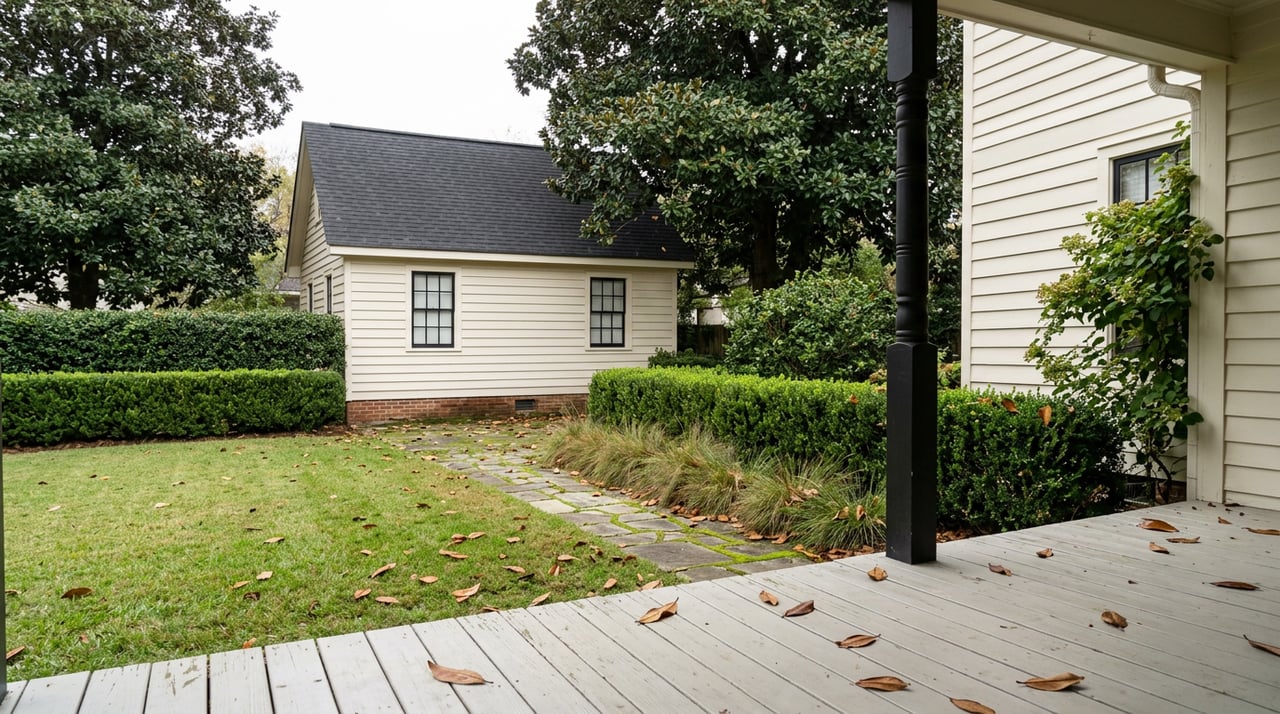
Scroll through East Nashville listings this fall and you'll see the same three letters doing very different work. One post touts a Cleveland Park single-family home with a detached accessory dwelling unit as a package deal, pitched at a buyer who wants flexibility down the road. Another, a few streets over, is a fully furnished, non-owner-occupied short-term rental, styled and ready to take guests the week it closes. Both use "DADU" in the description. Both imply rental income. The new rules, however, distinguish between building a DADU and using one as a short-term rental.
That gap is the direct result of a zoning ordinance that Metro Council finished passing in December 2025, one that made backyard cottages easier to build across nearly all of East Nashville and, in the same bill, made most of them ineligible for the exact use that made them attractive as an investment in the first place.
Ordinance BL2025-1007 rewrote the rules for detached accessory dwelling units, and Metro Council approved it 29 to 8 with one abstention. Before this, a DADU generally required your property to sit inside a specific overlay district, a designation the city had to grant parcel by parcel. That requirement is gone for most of East Nashville. According to FABL Architecture, if your lot falls within the Urban Services District, which covers the neighborhood's core, a DADU is now allowed under base zoning, no overlay application needed. The old rule requiring alley access for many lots was dropped too.
The size limits grew with the change. DADUs used to be capped at a flat 700 square feet no matter the lot. Under the new code, Tiny Home List says that a lot under 10,000 square feet can support up to 850 square feet of living space, and a lot of 10,000 square feet or more can go up to 1,200. Height is tied to the primary house: 10-foot eaves for a one-story unit, 17-foot eaves for two stories
Read on its own, that's a straightforward expansion of what a homeowner can build. It is the second half of the bill that changes the math for anyone counting on rental income.
Buried in the same ordinance is a restriction on how a new DADU can be used once it's built. A council member's own summary of the substitute language, shared on Public Square ahead of the November 2025 committee hearing, described the change plainly: it was written for "prohibiting owner-occupied Short Term Rental Property (STRP) within a new DADU in RS single family zoning."
In practice, that means a newly constructed DADU on an RS-zoned lot, the standard single-family designation covering most of East Nashville's housing stock, cannot get an owner-occupied short-term rental permit. Build the backyard cottage under the new by-right path, and you can rent it long-term, house a family member, or use it yourself. You cannot list it on a nightly platform.
McSeveney Law, a firm that has been fielding client questions on the ordinance since it took effect, flagged a real gap in the text: it targets newly constructed units going forward but doesn't clearly say how the restriction applies to DADUs that already held short-term rental permits before the rule changed. Whether those older, grandfathered units can keep operating as nightly rentals, or whether the new restriction reaches back to them, remains an open question nobody has definitively answered in writing. If you're evaluating a DADU with an existing STR history, that ambiguity is worth a direct conversation with Metro Codes before you assume anything about future income.
The restriction is also specific to RS zoning. Lots zoned R, RM, or mixed-use may still qualify for short-term rental permits in a DADU, depending on how the existing citywide short-term rental framework applies. According to PropertyZoned, most of East Nashville's single-family blocks, though, sit in RS zoning categories like RS7.5, RS10, and RS15. For those addresses, the new by-right path and the nightly-rental path no longer run together.
Here's the part that should temper any assumption that easier permitting means a wave of new short-term rentals is coming. East Nashville had its own version of this system years before the citywide change, and the results are already on the record.
Starting in 2022 and expanded in 2024, the city created a DADU overlay specifically covering the area north of West Eastland Avenue. Unlike the new base-code rule, that overlay was built with rental flexibility in mind from the start. An October 2025 Metro Planning Commission staff report, prepared as part of the review for BL2025-1007, put a number on how many homeowners actually used it: 10 permits issued, out of an estimated 973 eligible parcels.
That's roughly one percent uptake, in the exact pocket of East Nashville where the rules were friendliest to rental income, over a two-year window when interest in Airbnb-style investment property was running high nationally. The overlay wasn't the obstacle. Building a detached unit typically runs $150,000 to $250,000 in this market, even before furnishing it for guests, and that upfront cost is what actually determines whether a project pencils out, not whether a permit requires an overlay application or a base-zoning checkbox. Removing the overlay step doesn't remove that number. It just removes one piece of friction on the way to spending it.
The base-code simplification also doesn't reach every part of East Nashville the same way. A large share of the neighborhood, particularly the older streetcar-suburb sections closest to Five Points, sits inside a historic or conservation zoning overlay administered by the Metro Historic Zoning Commission, and those districts kept their own review process regardless of what changed citywide.
| Overlay type | Where it applies | What it requires for a DADU |
|---|---|---|
| Historic district overlay | Edgefield | According to Preserve Nashville, full Metro Historic Zoning Commission review of all exterior work, including new construction and architectural detail |
| Neighborhood conservation overlay | Lockeland Springs-East End, Eastwood | Lighter Historic Zoning Commission review focused on massing and street-facing changes, with minor alterations exempted |
According to Site Plan Creator, a DADU proposed in Edgefield needs a Certificate of Appropriateness before a shovel goes in the ground, the same design review that governs a new porch railing or a repainted brick facade. A lot in Eastwood faces a lighter version of that same review. Two addresses four blocks apart can be on completely different timelines for the same 850-square-foot structure.
If you're looking at East Nashville listings that mention DADU potential as a selling point, the phrase now needs three follow-up questions before you factor any income into your numbers. First, is the lot zoned RS, and if so, is the seller or listing agent implying short-term rental income that the new base-code path won't actually allow. Second, does the address fall inside a historic district like Edgefield, where the review adds real time even under the simplified rules, or a lighter conservation overlay like Lockeland Springs-East End or Eastwood. Third, if a DADU already exists with an active short-term rental permit, has anyone confirmed with Metro Codes whether that permit predates the new restriction and how it's being treated going forward.
None of this shows up automatically in a listing sheet. It shows up in a zoning pull and a conversation with someone who has already had to ask these questions for another buyer. With East Nashville's median sale price sitting at $567,000 over the three months ending June 2026, down about 5.5 percent from the same stretch a year earlier, buyers are already stretching to make the math work. A backyard unit that turns out to be long-term-rental-only rather than nightly-rental-ready is a different financial plan, not a minor footnote.
Does this affect a DADU I already own or one already permitted under the old East Nashville overlay? The ordinance is written to apply to newly constructed units. How it treats DADUs that already hold short-term rental permits under the pre-2025 rules is genuinely unresolved in the text, and it's worth confirming directly with Metro Codes rather than assuming either way.
How do I find out if my target property is RS or R zoned? Metro's zoning classification tied to the parcel, not the listing description. A quick check before you tour, rather than after you've fallen for the layout, saves a renegotiation later.
Edgefield's review is the most thorough of the three overlay types active in the neighborhood.
The rules just got simpler to read and harder to summarize in one sentence, which is exactly the kind of detail that's easy to miss until you're three weeks into a contract. If you're weighing an East Nashville property with DADU language in the listing, Dawn Cassara can walk the zoning and overlay status with you street by street before you commit to a number that assumes income the property may not actually be allowed to earn.
This article is general information, not legal, tax or financial advice. Consult a qualified professional about your situation.
Stay up to date on the latest real estate trends.

Dawn Cassara is dedicated to delivering exceptional real estate experiences with a personalized approach. Her expertise and commitment ensure clients achieve their goals seamlessly.