Should you buy a brand-new home or a well-cared-for resale in Mount Juliet? It is a big decision, and the right choice depends on your timing, budget, and how you want to live day to day. You want clear, local guidance so you can compare the real costs, timelines, and tradeoffs without surprises. In this guide, you will learn the key differences that matter in Mount Juliet, how to budget for each option, and a simple decision framework to choose with confidence. Let’s dive in.
New vs. resale at a glance
| Factor |
New Construction |
Resale Home |
| Move-in timeline |
Often 2–6 months for a spec home; 4–9+ months for a to-be-built |
Commonly 30–45 days from contract |
| Upfront price factors |
Base price plus lot premium and upgrades; builder incentives may apply |
Negotiated price; potential seller credits or repairs |
| Maintenance in first 1–5 years |
Typically lower; covered by builder warranties |
Potential near-term system replacements and repairs |
| Customization |
High for finishes and some layouts |
Lower; you may renovate over time |
| Warranties |
Workmanship, systems, and structural coverage common |
None by default unless seller provides a third-party plan |
| HOA and amenities |
Often active HOAs, amenities, and dues |
Varies widely; many older areas have lower or no HOA |
| Lot size pattern |
Smaller suburban lots are common |
Often larger lots with mature landscaping |
Mount Juliet context that matters
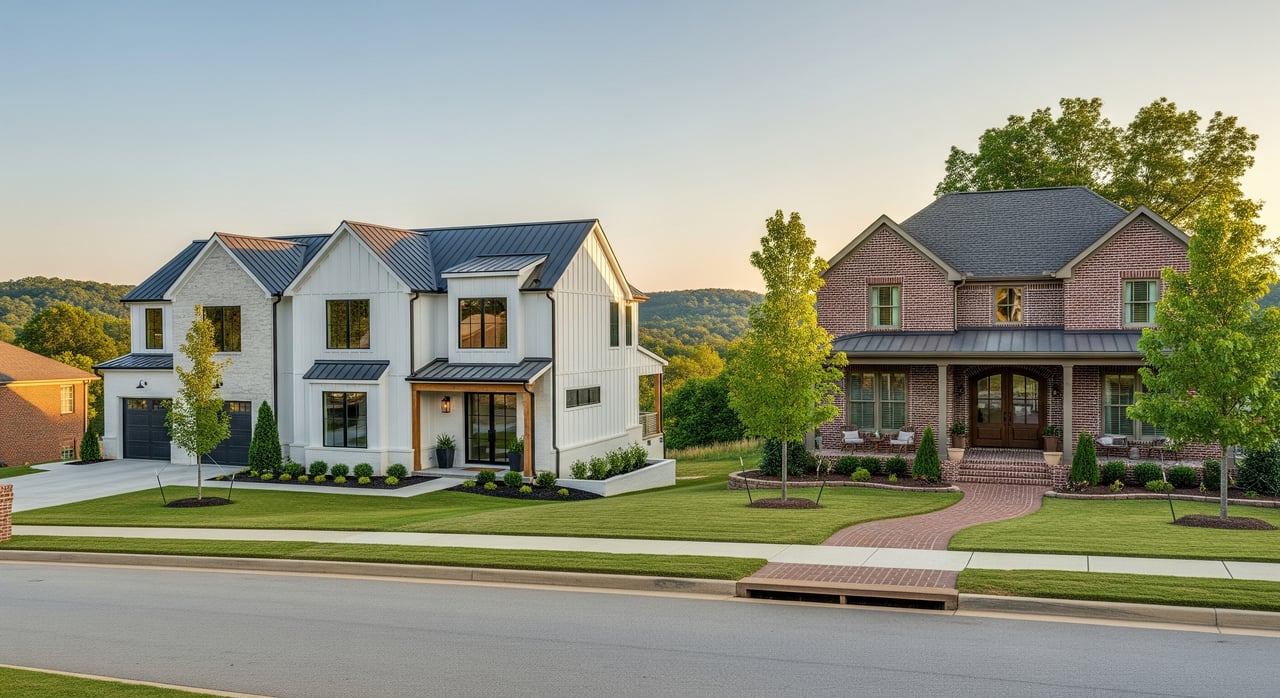
Mount Juliet’s growth is shaped by its proximity to Nashville and the commute along I-40, Old Hickory Boulevard, and Mt. Juliet Road. Newer subdivisions often sit on the edges of town with active HOAs and smaller lots, while many older neighborhoods closer to central Mount Juliet offer larger yards and established trees. These location patterns affect price, commute times, and long-term appeal.
Total cost: what to compare
Purchase price and incentives
- New construction: You will see a base price, then add a lot premium, structural choices, and finish upgrades. Builders sometimes offer incentives like closing cost help or rate buydowns, which can change quickly. Always get every incentive and upgrade in writing.
- Resale: Price is negotiated. You may seek seller concessions for closing costs, repairs, or a price reduction based on inspection findings.
Closing costs and financing
- New construction: If you use a construction-to-permanent loan, expect additional lender steps and potentially higher closing costs tied to conversion. Many builders have preferred lenders that offer promotional rates or closing cost help, but compare those quotes with independent lenders.
- Resale: A conventional loan is common with a shorter timeline to close. Closing costs are typically more straightforward than construction loans.
Taxes, insurance, and ongoing costs
- Property taxes: Wilson County assesses taxes based on the home’s value. A newly built home is assessed when completed, which may change your tax bill compared to the initial land-only amount.
- Homeowners insurance: Newer systems and roofs can lower premiums early on, but your rate depends on replacement cost, location, and coverage.
- HOA dues: Many new master-planned communities have monthly or annual dues and may have special assessments over time. Older neighborhoods may have minimal dues or none at all.
Maintenance and near-term repairs
- New: Expect lower immediate repairs thanks to new systems and warranties. Budget for routine upkeep and any finish upgrades you want after closing.
- Resale: Plan for age-related items like roof, HVAC, water heater, or appliance replacements in the first few years. Your inspection will help estimate these costs.
Resale value and appreciation drivers
In Mount Juliet, proximity to commute routes, everyday conveniences, community amenities, and lot characteristics all influence resale value. Larger or more private lots, mature landscaping, and neighborhood variety can be attractive over time. In newer subdivisions with many similar homes, finishes, lot placement, and model popularity can set your home apart when you resell.
Timelines and contracts
Typical timelines
- New construction: A move-in ready spec home can close in about 2–6 months depending on completion. A buyer-selected build often takes 4–9 months based on builder backlog, site prep, and weather. Semi-custom or custom builds can run 6–12+ months.
- Resale: Once under contract, most closings in this area are about 30–45 days depending on your financing and negotiations.
Contingencies and contract terms
- New construction: Builder contracts often favor the builder. Review start and completion dates, remedies for delays, warranty coverage, and the change order process. Know how upgrade pricing locks and when it becomes nonrefundable.
- Resale: Buyer-friendly contingencies are typical, including inspection, financing, appraisal, and title. You can negotiate repairs or credits after inspection.
Permits, inspections, and occupancy
New builds require permits and municipal inspections before you get a certificate of occupancy. Utility tie-ins for water, sewer, and electric can influence timelines. Ask your builder to outline expected milestones and who coordinates with Mount Juliet Building and Codes, Wilson County for site work, and utility providers.
Appraisal and financing
- New construction: Appraisers look for comparable new homes. In subdivisions with several sales, this is easier. Unique custom builds can be harder to appraise.
- Resale: Appraisals typically rely on recent local sales in similar neighborhoods, which is often more straightforward.
Warranties and inspections
Builder warranties
Many builders offer tiered coverage that often includes a 1-year workmanship warranty, a 2-year mechanical systems warranty, and a 10-year structural warranty. Some use third-party warranty providers. Confirm what is covered, how to file claims, and whether coverage transfers if you sell.
Independent inspections
- For new construction: Hire an inspector for a pre-drywall inspection, then a detailed final inspection before closing. Consider a follow-up near the end of your one-year warranty to catch items while coverage remains. Add specialists as needed for roof, HVAC, or pest concerns.
- For resale: Order a full home inspection. Depending on age and history, consider radon, sewer scope, termite, lead-based paint (for homes built before 1978), or mold evaluations.
Warranty exclusions and claims
Cosmetic items usually have a short reporting window. Damage caused by owner changes or landscaping may be excluded. Drainage and grading issues can be complex, so verify the site plan and ask the builder to walk you through water flow and maintenance responsibilities. Document everything with photos and dates, and follow the builder’s claim process in writing.
HOAs and lots in Mount Juliet
HOA structure and rules
Newer subdivisions commonly have HOAs with architectural review, exterior guidelines, amenity rules, and rental policies. Older areas may have fewer covenants or none. Review covenants, fees, budgets, and reserve studies if available. Ask about any planned capital projects or past special assessments.
Fees and assessments
Early HOA dues in new communities can help fund amenities such as pools, trails, or clubhouses. Understand what is included, who maintains common areas and drainage, and how reserves are funded.
Lot sizes and site features
In many Nashville-area new subdivisions, lots often range around 0.12 to 0.25 acres. Older or semi-rural Mount Juliet lots can be 0.25 to 0.5+ acres with mature trees. Topography, orientation, and tree cover affect privacy, drainage, and landscaping costs, so walk the lot and study the plat map.
Utilities and infrastructure
New neighborhoods typically include water, sewer, electric, and often fiber. Confirm who maintains stormwater features such as detention basins. For resales, verify whether the home is on city sewer or septic, and ask for service records if a private system is present.
Local example scenarios
Use these examples to picture tradeoffs. Exact numbers vary by subdivision and market conditions.
Example A: Production subdivision new build
- Lot: Smaller suburban lot with nearby amenities.
- Price structure: Base price plus a lot premium and finish upgrades. Builder may offer closing cost help or rate buydown.
- Timeline: About 6 months for a to-be-built, faster for a near-complete spec.
- HOA: Active HOA with community amenities.
- Upside: Modern layout, lower near-term maintenance, warranty coverage.
- Consider: Smaller yard, ongoing construction nearby, HOAs with architectural rules.
Example B: Resale near central Mount Juliet
- Lot: Larger yard with mature trees and established landscaping.
- Price structure: Negotiated price, potential seller credits for updates.
- Timeline: About 30–45 days to close.
- HOA: None or limited covenants in many older neighborhoods.
- Upside: Space and character, established street appeal, predictable closing timeline.
- Consider: Older systems, possible roof or HVAC replacement in the first few years.
Example C: Semi-custom on a private or oversized lot
- Lot: Buyer-owned or newly purchased lot, possibly outside dense subdivisions.
- Timeline: Often 8–12+ months including site work and permitting.
- Consider: Higher upfront costs, construction oversight, and unique appraisal process. Offers maximum customization and long-term lot value.
Decision framework: find your fit
Use this step-by-step approach to compare real options in Mount Juliet.
- Define must-haves and nice-to-haves
- Timeline to move, yard size, commute needs, community amenities, and budget range.
- Get current local numbers
- Compare median prices and price per square foot for new vs resale. Note typical lot sizes and HOA dues for the neighborhoods you like.
- Check your timeline tolerance
- Need to move in under 3 months, choose resale or a completed spec.
- Can wait 4–9 months and want customization, consider a new build.
- Build a full budget
- New: Base price plus lot premium, structural changes, design upgrades, and estimated closing costs. Ask for a written incentive sheet.
- Resale: Offer price plus closing costs, immediate repair allowance based on inspection, and first-year maintenance reserves.
- Evaluate risk and complexity
- Comfortable with construction schedules and warranty processes, new construction may fit.
- Prefer predictability and an established neighborhood, resale may be better.
- Align financing
- If considering a construction-to-permanent loan, discuss costs and documentation with your lender. For resale, compare conventional options and timelines.
Quick comparison checklist
Collect these for each home you are considering.
- Total estimated purchase cost, including upgrades or repair allowance
- Monthly costs: mortgage, taxes, insurance, HOA dues
- First 5-year maintenance and replacement estimate
- Contract-to-occupancy timeline
- Warranty coverage length and transferability
- Lot size, orientation, easements, and drainage plan
- Commute times to work and daily routes along I-40 and Mt. Juliet Road
Smart local due diligence
When you get serious about a specific home or community, request and review:
- Builder documents: price list with lot premiums, sample contract, standard features, warranty booklet, average build time, and energy features.
- HOA documents: covenants, fee schedule, budgets, reserve study, and any planned capital projects.
- Resale records: age of roof, HVAC, water heater, sewer or septic service history, permits for past work, and any known drainage or pest remediation.
- Inspections: pre-drywall and final for new builds, full home inspection for resales, plus radon, termite, sewer scope, or other specialists as needed.
Your next step
Whether you lean new or resale, having a local advocate who knows Mount Juliet’s micro-markets will save you time, money, and stress. If you want help comparing real homes side by side, estimating true total cost, and negotiating favorable terms, reach out to Dawn Cassara. You will get calm, detailed guidance and a plan that fits your timeline.
FAQs
Are builder warranties reliable in Mount Juliet?
- Yes, they offer meaningful short-term protection for workmanship, systems, and structure, but you should still hire independent inspectors and review exclusions and claim procedures.
Can you negotiate with a builder on a new home?
- Often yes. You can negotiate incentives such as closing cost help, rate buydowns, select upgrades, and sometimes lot premiums. Always get offers in writing.
Is homeowners insurance cheaper for new construction?
- Often in the early years because of new systems and roofs, but premiums still depend on replacement cost, location, and the coverage you choose.
Do you need an inspection for a brand-new home?
- Yes. Order a pre-drywall and a final inspection, and consider another inspection near the end of your one-year warranty to catch items while covered.
How do lot sizes typically compare in Mount Juliet?
- Many newer subdivisions feature smaller suburban lots, often around 0.12 to 0.25 acres, while older or semi-rural areas may offer 0.25 to 0.5+ acres with more mature trees.